Mere Recovery Without Proof of Demand Cannot Sustain PC Act Conviction: Supreme Court Acquits in Rafikmiya Ahmedmiya Malek v. State of Gujarat (2026 INSC 890)
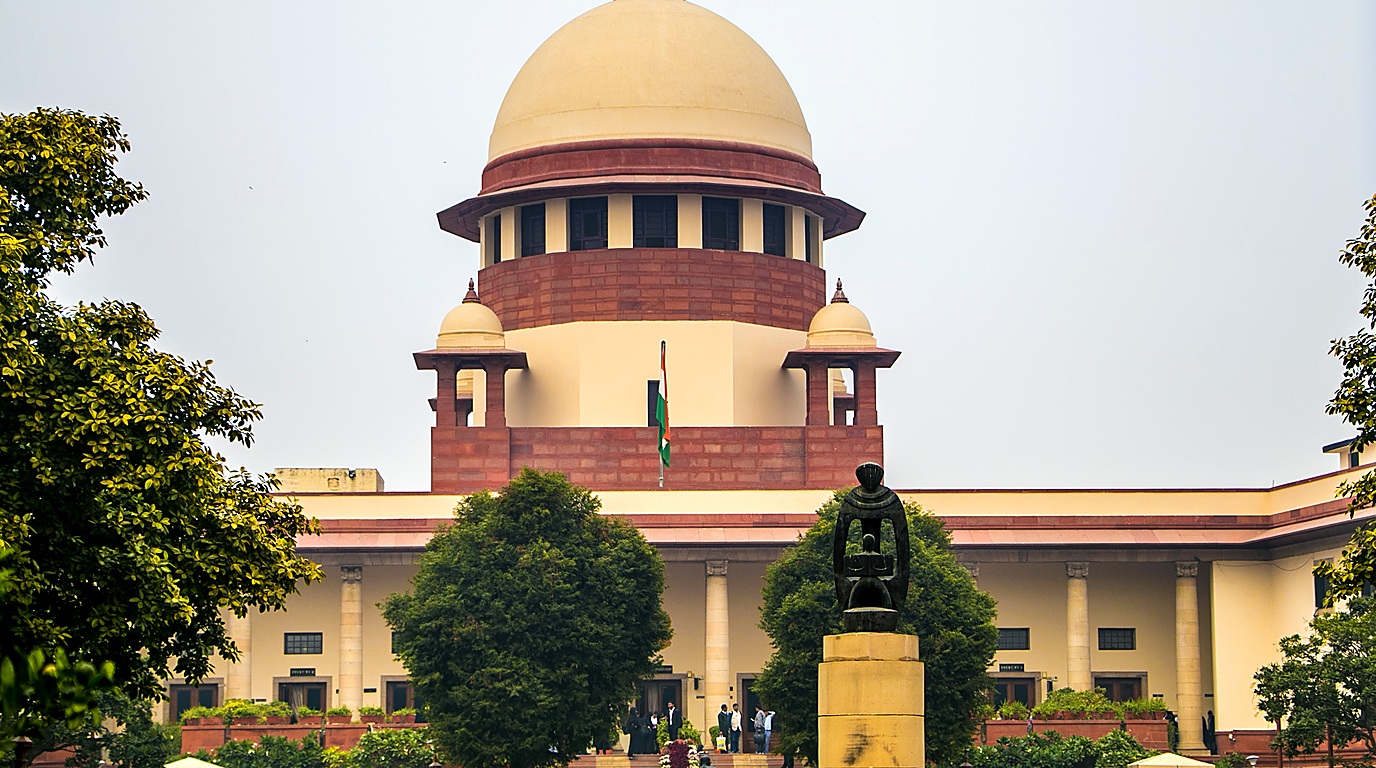
Rafikmiya Ahmedmiya Malek & Anr. v. State of Gujarat
Bench: Hon'ble Mr. Justice Ujjal Bhuyan & Hon'ble Mr. Justice Atul S. Chandurkar (Authored by Chandurkar, J.)
Judgment Date: 19 August 2026 • Analysis by: V Gayathri
In Rafikmiya Ahmedmiya Malek & Anr. v. State of Gujarat (2026 INSC 890), the Supreme Court of India delivered a crucial ruling reinforcing the evidentiary rigor demanded in anti-corruption prosecutions. Reversing concurrent convictions rendered by the Special Court and the Gujarat High Court, the Division Bench held that mere recovery of marked currency notes during an Anti-Corruption Bureau (ACB) trap cannot substitute for proof of prior demand for illegal gratification. The Court reiterated that proof of demand is an indispensable foundational fact that must be established beyond reasonable doubt before the statutory presumption under Section 20 of the Prevention of Corruption Act, 1988 (PC Act) can be invoked. Additionally, the Court struck down a prosecution sanction granted by an authority not legally competent to remove the public servant from office under Section 19(1)(c).
| Case Reference & Judicial Metadata | |
|---|---|
| Case Title | Rafikmiya Ahmedmiya Malek & Anr. v. State of Gujarat |
| Citation | 2026 INSC 890 |
| Court & Jurisdiction | Supreme Court of India (Criminal Appellate Jurisdiction) |
| Bench Composition | Hon'ble Mr. Justice Ujjal Bhuyan and Hon'ble Mr. Justice Atul S. Chandurkar |
| Judgment Author | Hon'ble Mr. Justice Atul S. Chandurkar |
| Date of Decision | 19 August 2026 |
| Core Subject | Prevention of Corruption Act, 1988 (Secs. 7, 12, 13(1)(d), 13(2), 19(1)(c), 20); Proof of Demand vs. Mere Recovery; Trap Operations; Sanctioning Authority Competency. |
| Research & Analysis | V Gayathri, LLM Advocates Legal Research Cell |
| Final Outcome | Appeals Allowed: Judgments of Trial Court and High Court set aside; both accused acquitted of all corruption charges; bail bonds discharged. |
1. Material Facts and Factual Matrix
The controversy traces back to February 1996 in Bechri village, Gujarat. A student, Hasmukhbhai Maganbhai Chauhan, approached local authorities for an income certificate required to obtain educational concessions. The application was marked to the Talati-cum-Mantri of the village, designated as Accused No. 1 (A1).
According to the prosecution case, A1 demanded an illegal gratification of Rs. 120 from the complainant—Rs. 100 for himself and Rs. 20 for the village Panchayat peon, Accused No. 2 (A2).
The complainant lodged a complaint with the Anti-Corruption Bureau (ACB), which laid a trap on 19 February 1996. During the trap operation:
- The complainant received the signed income certificate from A1.
- No money was demanded by A1 during the trap, nor was any currency handed to or recovered from A1.
- Instead, the complainant handed a single Rs. 20 note to the peon (A2), who placed it into his pocket.
- The remaining Rs. 100 was never tendered to anyone, contrary to the ACB's operational pre-trap instructions.
The Special Court convicted A1 under Sections 7 and 13(1)(d) read with 13(2) of the PC Act and A2 under Section 12, while acquitting both of criminal conspiracy under Section 120B IPC. The Gujarat High Court dismissed their criminal appeals in 2015.
2. Substantive Issues Formulated by the Supreme Court
- Whether the prosecution established the foundational fact of a demand for illegal gratification by A1 beyond reasonable doubt?
- Whether the mere recovery of a Rs. 20 currency note from A2 is sufficient in law to trigger the statutory presumption under Section 20 of the PC Act and sustain convictions under Sections 7 and 13(1)(d)?
- Whether the prosecution sanction granted against A1 by the Deputy District Development Officer (Dy. DDO) was invalid under Section 19(1)(c) of the PC Act for lack of statutory competency?
- Whether the concurrent findings of guilt recorded by the Trial Court and the High Court warranted interference under Article 136 of the Constitution?
3. Contentions of the Parties
Appellants' Submissions (A1 & A2)
- Absence of Demand and Possession: A1 neither demanded nor accepted any money during the trap, and no currency was recovered from his person. A2 never demanded any bribe at any point.
- Material Inconsistencies: In prior proceedings, the complainant stated that A1 initially demanded Rs. 200 which was settled at Rs. 120, a material contradiction omitted in his deposition.
- Plausible Defence: The Rs. 20 given to A2 was voluntary baksheesh / festival tip on the eve of the approaching festival of Eid, handed over after the certificate had already been delivered.
- Incompetent Sanction: Under Section 19(1)(c) PC Act read with the Gujarat Panchayats Act, 1961, the District Development Officer (DDO) was the sole authority competent to remove a substantive Talati-cum-Mantri. The Dy. DDO possessed no removal jurisdiction.
Submissions of the Respondent (State of Gujarat)
- Concurrent Factual Findings: Both lower courts had evaluated the evidence and concurrently held the initial demand proved against A1 and the receipt proved against A2.
- Successful Trap: The recovery of phenolphthalein-marked currency from A2 confirmed the execution of the demand made by A1 on behalf of both public servants.
- Valid Sanction: The Dy. DDO had originally appointed A1 on an ad-hoc basis and was therefore competent to grant sanction.
4. Judgment and Reasoning of the Supreme Court
A. Demand is the Sine Qua Non of Corruption Offences
Authored by Hon'ble Mr. Justice Atul S. Chandurkar, the Supreme Court emphasized that proof of demand is the essential prerequisite without which no offence under Section 7 or Section 13(1)(d) can be sustained:
"It is well settled that the demand for illegal gratification is an indispensable foundational fact that must be proved beyond reasonable doubt. Mere receipt or recovery of money, unaccompanied by proof of demand, cannot bring home an accusation under the Prevention of Corruption Act."
The Court identified fatal discrepancies in the complainant's testimony:
- He altered his account regarding the sum originally demanded (Rs. 200 vs. Rs. 120).
- He disobeyed the ACB's clear operational instruction to pay the entire demanded amount of Rs. 120 when demanded; instead, he paid only Rs. 20 to A2 without any demand whatsoever.
- The official act (issuance and handover of the income certificate) was already concluded prior to the handing over of the Rs. 20 note, creating serious reasonable doubt.
B. Section 20 Presumption Cannot Fill Evidentiary Voids
The Court rejected the State's plea that recovery of the Rs. 20 note triggered the legal presumption under Section 20 of the PC Act. Relying on the three-Judge Bench decision in N. Vijayakumar v. State of Tamil Nadu (2021) 3 SCC 687, the Court affirmed:
- The statutory presumption under Section 20 arises only after the foundational fact of demand and voluntary acceptance is established by the prosecution.
- The presumption cannot be used to supply or substitute missing proof of demand.
- Since demand remained unproved, the recovery of currency from A2 was insufficient in law.
C. Invalidity of Prosecution Sanction Under Section 19(1)(c)
The Supreme Court found that the prosecution sanction accorded against A1 was legally vitiated. Under Section 19(1)(c) of the PC Act, sanction must be granted by the authority competent to remove the public servant from office. While A1's initial ad-hoc appointment had been made by the Dy. DDO, at the time of sanction he held the substantive post of Talati-cum-Mantri, for which the statutory removal authority was the DDO under the Gujarat Panchayats Act, 1961.
5. Ratio Decidendi
Core Principles Established:
- Demand Before Presumption: The presumption under Section 20 of the PC Act cannot be invoked unless the prosecution first proves the foundational fact of a demand for illegal gratification beyond reasonable doubt.
- Mere Recovery Insufficient: Recovery of currency notes from an accused, by itself, is wholly insufficient to sustain a conviction under Sections 7, 12, or 13(1)(d).
- Competency of Removal Authority: Sanction under Section 19(1)(c) must be granted by the authority possessing legal power to remove the public servant from their substantive post at the time of granting sanction.
6. Precedents Reaffirmed
| Precedent | Principle Reaffirmed |
|---|---|
| N. Vijayakumar v. State of Tamil Nadu (2021) 3 SCC 687 | Three-Judge Bench ruling holding that proof of demand is mandatory before invoking the presumption under Section 20. |
| B. Jayaraj v. State of A.P. (2014) 13 SCC 55 | Mere possession and recovery of currency notes cannot bring home charges under Sections 7 and 13(1)(d) without independent proof of demand. |
| P. Satyanarayana Murthy v. State of A.P. (2015) 10 SCC 152 | Reiteration that proof of demand constitutes the sine qua non for establishing corruption offences. |
7. Conclusion
Rafikmiya Ahmedmiya Malek v. State of Gujarat serves as a vital safeguard for public servants against speculative corruption prosecutions based entirely on recovery without foundational proof. The Supreme Court's rigorous insistence on proof of demand and compliance with statutory sanction requirements underscores that evidentiary discipline cannot be diluted by the perceived gravity of corruption charges.
Author Attribution & Editorial Disclosure: Prepared by V Gayathri of the LLM Advocates Legal Research Cell. Contributors are permitted to use Artificial Intelligence tools to assist in legal research, synthesis, and drafting. All statutory interpretations and case citations have been independently verified against official Supreme Court records.