Doctrine of Proportionality & Sentencing Discretion in Gang Rape: Supreme Court Modifies Natural Life Sentence to 20 Years in Ehsaan v. State of NCT of Delhi (2026 INSC 720)
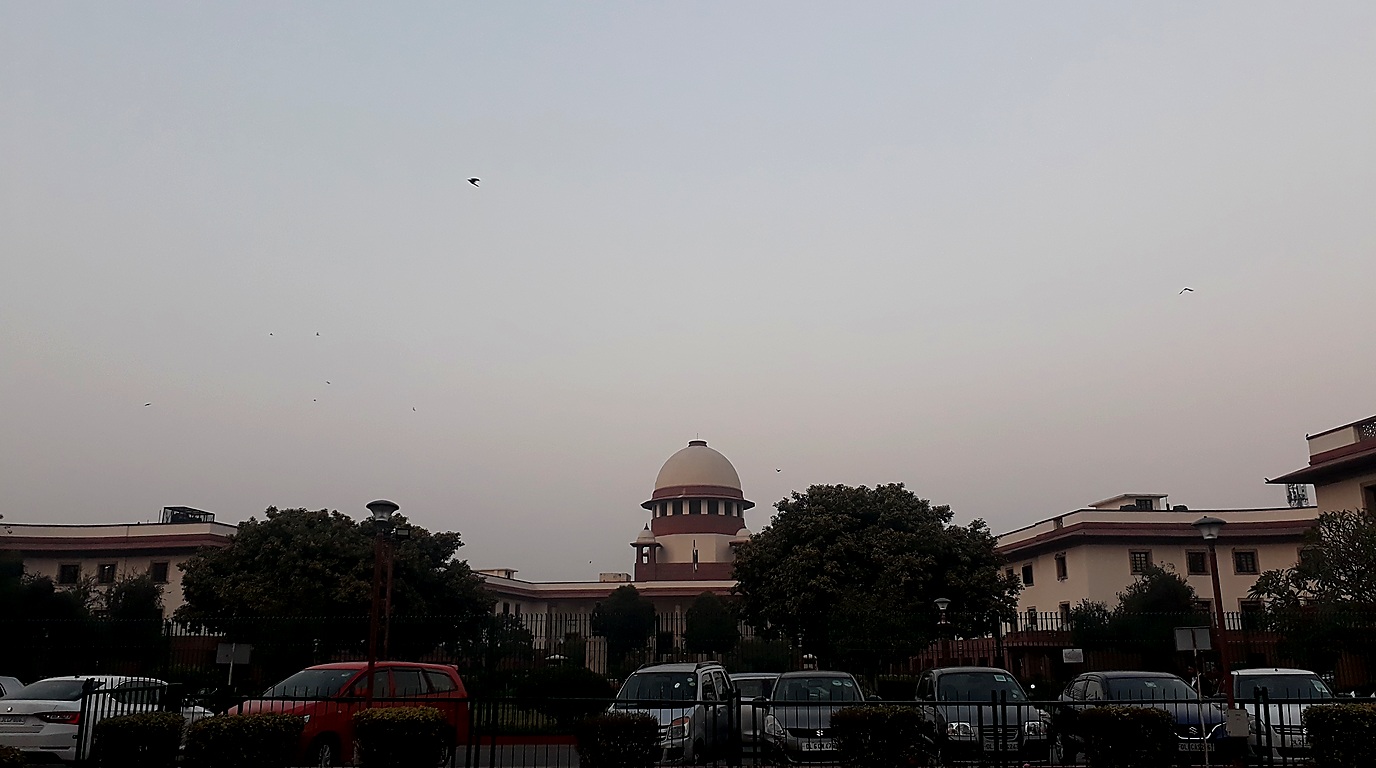
Ehsaan v. State of National Capital Territory of Delhi
Bench: Hon'ble Mr. Justice Sanjay Karol & Hon'ble Mr. Justice Augustine George Masih
Judgment Date: 20 July 2026 • Analysis by: Tanushree G L
In Ehsaan v. State of NCT of Delhi (2026 INSC 720), the Supreme Court of India delivered a jurisprudentially vital ruling addressing the delicate constitutional balance between retributive societal deterrence and the Doctrine of Proportionality in criminal sentencing. While upholding the appellant's conviction for gang rape under Section 376-D of the Indian Penal Code, 1860 (IPC), the Division Bench partly allowed the appeal on sentence, setting aside the trial court and Delhi High Court's imposition of imprisonment for the remainder of natural life and modifying it to 20 years of rigorous imprisonment (the mandatory statutory minimum under the post-2013 Criminal Law Amendment regime). The judgment synthesizes decades of sentencing precedents to formulate an exhaustive multi-factor balancing test for judicial discretion.
| Case Reference & Judicial Metadata | |
|---|---|
| Case Title | Ehsaan v. State of National Capital Territory of Delhi |
| Citation | 2026 INSC 720 |
| Appellate Number | Criminal Appeal No. ____ of 2026 (Arising out of SLP (Crl.) No. 3407 of 2026) |
| Bench Composition | Hon'ble Mr. Justice Sanjay Karol and Hon'ble Mr. Justice Augustine George Masih |
| Date of Judgment | 20 July 2026 |
| Statutory Enactment | Section 376-D IPC (substituted by the Criminal Law (Amendment) Act, 2013) |
| Research & Analysis | Tanushree G L, LLM Advocates Legal Research Cell |
| Final Outcome | Appeal Partly Allowed (Sentence Modified): Conviction affirmed; sentence modified from imprisonment for remainder of natural life to 20 years rigorous imprisonment with benefit of remission, if any. |
1. Material Facts and Procedural History
On the night of 7 September 2016, a police emergency call was received at Police Station I.P. Estate, New Delhi, reporting that a woman (PW-2) had been gang-raped. The victim had boarded a rickshaw near the Delhi Railway Station after the rickshaw puller (Ehsaan, the appellant) assured her safe passage home.
Instead of transporting her to her destination, the appellant took her to a deserted, secluded location near I.P. Estate where an accomplice (Umesh Giri) was already waiting. The two accused persons jointly subjected the victim to aggravated gang rape. FIR No. 0411/2016 was registered, and both accused were apprehended.
Following trial, the Additional Sessions Judge, Tis Hazari Courts, Delhi, convicted the appellant under Section 376-D IPC and sentenced him to rigorous imprisonment for life (meaning imprisonment for the remainder of his natural life) and a fine of Rs. 25,000. On 1 November 2017, the Delhi High Court (Criminal Appeal No. 814 of 2017) dismissed the appeal and upheld the maximum sentence in toto.
When the matter reached the Supreme Court, the Court vide order dated 5 January 2026 declined to interfere with the finding of guilt and restricted the scope of notice solely to the quantum of sentence.
2. Substantive Questions of Law Before the Court
- Whether the imposition of imprisonment for the remainder of natural life under Section 376-D IPC conforms to the constitutional Doctrine of Proportionality in the attending facts and circumstances of the case?
- What are the judicial parameters, constraints, and scope of mitigation governing sentencing policy under mandatory statutory frameworks like Section 376-D IPC post-2013?
- How must courts balance the tri-fold purposes of sentencing—punitive retribution, public deterrence, and correctional reformation—when adjudicating heinous offences against women?
3. Contentions of the Parties
Submissions of the Appellant (Ehsaan)
- Mitigating Circumstances of Youth: The appellant was only 25 years old at the time of the incident in 2016 and possessed no prior criminal record or antecedents.
- Substantial Incarceration & Conduct: He had already undergone nearly 10 years of continuous custody, demonstrating unblemished jail conduct and active participation in correctional programs.
- Rehabilitative Potential: Imprisonment for the remainder of natural life completely extinguishes any prospect of reformation, rendering the punishment disproportionately harsh compared to the 20-year statutory baseline.
Submissions of the Respondent (State of NCT of Delhi)
- Extreme Gravity and Breach of Trust: The offence was characterized by pre-meditation, entrapment of an unsuspecting lone commuter at night, and extreme physical violation.
- Legislative Mandate Under Section 376-D: Parliament amended the IPC in 2013 specifically to provide uncompromising retributive deterrence in the aftermath of the Nirbhaya tragedy.
- Protection of Society: The concurrent views of the Tis Hazari trial court and the Delhi High Court reflected the collective conscience of society and warranted no reduction.
4. Applicable Law & Sentencing Framework
- Section 376-D IPC (Post-2013 Amendment): Enacts a rigid sentencing spectrum prescribing a minimum sentence of 20 years rigorous imprisonment, extendable to imprisonment for life (remainder of natural life), and fine. Crucially, the 2013 amendment eliminated the judicial discretion to award less than the statutory minimum for "adequate and special reasons".
- Doctrine of Proportionality: The principle that punishment must be customized to fit both the crime and the offender, ensuring sentences are neither excessively lenient nor vindictively disproportionate.
- Tri-fold Purpose of Punishment: Reaffirmed across Sevaka Perumal v. State of T.N. (1991) and Surinder Singh v. State (2021)—punitive, deterrent, and protective objectives must be reconciled with reformative potential.
5. Judgment and Reasoning of the Supreme Court
A. Reconciling Retribution with Reformation
The Supreme Court, through Hon'ble Mr. Justice Sanjay Karol and Hon'ble Mr. Justice Augustine George Masih, affirmed that while sexual violence against women is a heinous offence causing irreparable trauma, judicial sentencing cannot degenerate into blind vengeance.
"When a sentence is imposed, it serves a tri-fold purpose: punitive, deterrent, and protective, with the overall objective of ridding society of criminal proclivity. While the legislative framework under Section 376-D IPC sets a strict floor of 20 years that courts cannot breach, selecting between 20 years and natural life requires an objective evaluation of mitigating circumstances, including age, antecedents, and potential for reformation."
B. Formulation of the Sentencing Checklist
Synthesizing landmark authorities from Bachan Singh to Surinder Singh, the Court articulated an illustrative eleven-factor balancing checklist that every sentencing court must evaluate:
- Nature, gravity, and heinousness of the offence.
- Motive, degree of pre-meditation, and brutality in execution.
- Impact on the collective conscience of society and public deterrence.
- Age of the offender at the time of commission.
- Criminal antecedents or absence thereof.
- Vulnerability and count of victims involved.
- Strict exclusion of irrelevant socio-cultural, caste, or religious biases.
- Conduct of the accused during investigation, trial, and custody.
- Period of incarceration already undergone.
- Demonstrable probability of reformation and rehabilitation.
- Adequacy of compensation and support for victim restoration.
C. Application to the Appellant
Evaluating the appellant's profile against this framework:
- He was 25 years old at the date of the offence.
- He was a first-time offender with no prior criminal involvement.
- He had served nearly a decade behind bars with exemplary prison conduct.
- The prosecution placed no evidence on record demonstrating an absolute impossibility of reformation.
Consequently, while the crime was too grave to warrant any indulgence below the statutory baseline, the imposition of natural life imprisonment was disproportionate. The Court modified the sentence to 20 years of rigorous imprisonment with statutory remission benefits, if any.
6. Precedents Synthesized
| Precedent | Core Sentencing Principle Reaffirmed |
|---|---|
| Sevaka Perumal v. State of T.N. (1991) 3 SCC 471 | Sentencing policy must protect society from criminal tendencies; undue leniency impairs public confidence in justice. |
| Surinder Singh v. State (2021) 19 SCC 344 | Surya Kant, J. established that proportional sentencing requires a holistic reconciliation of mitigating and aggravating circumstances. |
| State of Karnataka v. Krishnappa (2000) 4 SCC 75 | Sexual violence is an assault on human dignity demanding severe deterrence under retributive justice. |
| Shimbhu v. State of Haryana (2014) 13 SCC 318 | Mandatory statutory minimums enacted by Parliament must be strictly enforced without judicial evasion. |
7. Landmark Significance
Ehsaan v. State of NCT of Delhi establishes a vital judicial precedent harmonizing mandatory statutory minimums with constitutional proportionality. By curbing the mechanical practice of imposing natural life imprisonment in gang rape prosecutions where reformative indicators exist, the Supreme Court has safeguarded individualized sentencing justice while preserving the legislative mandate of severe deterrence.
Author Attribution & Editorial Disclosure: Prepared by Tanushree G L of the LLM Advocates Legal Research Cell. Contributors are permitted to use Artificial Intelligence tools to assist in legal research, synthesis, and drafting. All statutory interpretations and case citations have been independently verified against official Supreme Court records.