Decentralizing High Court Sittings & Expanding Access to Justice: Supreme Court Upholds Kolhapur High Court Sitting in Ranjeet Baburao Nimbalkar v. State of Maharashtra (2025 INSC 1460)
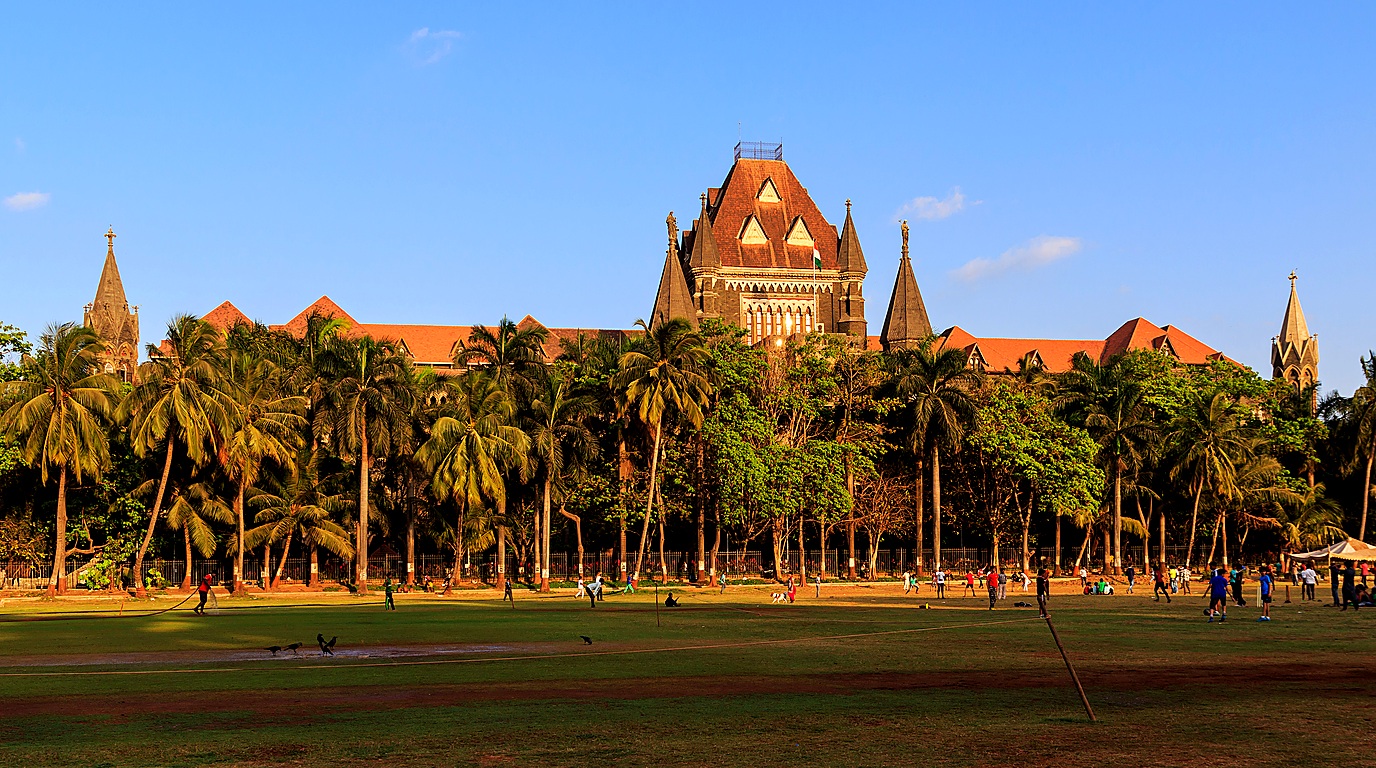
Ranjeet Baburao Nimbalkar v. State of Maharashtra & Anr.
Bench: Hon'ble Mr. Justice Aravind Kumar & Hon'ble Mr. Justice N.V. Anjaria
Judgment Date: 18 December 2025 • Analysis by: Ragasree Polineni
In Ranjeet Baburao Nimbalkar v. State of Maharashtra & Anr. (2025 INSC 1460), the Supreme Court of India delivered an authoritative constitutional ruling on judicial administration and geographic decentralization of justice. Dismissing a writ petition under Article 32 of the Constitution, the Division Bench upheld Bombay High Court Notification No. P.0108/2025 designating Kolhapur as an additional place of sitting under Section 51(3) of the States Reorganisation Act, 1956. The judgment firmly establishes that Section 51(3) confers a continuing, plenary administrative power upon the Chief Justice (with Gubernatorial approval) that operates independently of Section 51(2) permanent Benches, requires no mandatory Full Court concurrence, and directly fulfills the constitutional promise of access to justice under Articles 14 and 21.
| Case Reference & Judicial Metadata | |
|---|---|
| Case Title | Ranjeet Baburao Nimbalkar v. State of Maharashtra & Anr. |
| Citation | 2025 INSC 1460 |
| Proceedings | Writ Petition (Civil) No. 914 of 2025 (Under Article 32 of the Constitution) |
| Bench | Hon'ble Mr. Justice Aravind Kumar and Hon'ble Mr. Justice N.V. Anjaria |
| Date of Decision | 18 December 2025 |
| Impugned Instrument | Bombay High Court Notification No. P.0108/2025 dated 1 August 2025 |
| Core Subject | States Reorganisation Act, 1956 (Sec. 51(2) vs. 51(3)); High Court Sittings; Chief Justice Administrative Power; Full Court Consultation; Access to Justice (Arts. 14 & 21). |
| Research & Analysis | Ragasree Polineni, LLM Advocates Legal Research Cell |
| Final Outcome | Writ Petition Dismissed: High Court notification appointing Kolhapur as an additional place of sitting upheld; no order as to costs. |
1. Material Facts and Context of the Dispute
Litigants and Bar associations across five districts of southwestern Maharashtra—Kolhapur, Sangli, Satara, Ratnagiri, and Sindhudurg—had persistently submitted representations spanning several decades demanding an accessible seat of the High Court. Litigants from these southern districts were compelled to undertake arduous journeys exceeding 400 to 500 kilometers to Mumbai, bearing prohibitive lodging, travel, and advocacy expenses, which severely impeded timely legal recourse.
On 1 August 2025, following institutional review and upon securing the formal approval of the Governor of Maharashtra, the Bombay High Court issued Notification No. P.0108/2025 in exercise of the powers conferred under Section 51(3) of the States Reorganisation Act, 1956. The notification appointed Kolhapur as an additional place of sitting of the Bombay High Court.
The petitioner, Ranjeet Baburao Nimbalkar, directly approached the Supreme Court by instituting a Writ Petition under Article 32 of the Constitution of India, challenging the legality of the notification and seeking an order of restraint against holding High Court sittings at Kolhapur.
2. Substantive Issues Before the Supreme Court
- Whether Section 51(3) of the States Reorganisation Act, 1956 contemplates a continuing, permanent arrangement for an additional place of sitting, or is confined strictly to temporary, ad-hoc sittings?
- Whether consultation with or the approval of the Full Court of the High Court is a mandatory legal prerequisite before the Chief Justice exercises power under Section 51(3)?
- Whether prior administrative decisions of the High Court rejecting similar proposals create a legal bar or issue estoppel preventing subsequent reconsideration and approval?
- What is the legitimate scope of judicial review under Article 32 over discretionary administrative decisions relating to judicial administration and court sittings?
- Whether the selection of Kolhapur violated the equality clause under Article 14 or the right to access to justice under Article 21 by supposedly diverting resources away from the District judiciary?
3. Contentions of the Parties
Submissions of the Petitioner
- Circumvention of Section 51(2): The petitioner argued that Section 51(3) was being misused to establish what is functionally a permanent Bench, thereby circumventing the stringent statutory mechanism under Section 51(2), which requires a Presidential order after tripartite consultation between the President, Governor, and Chief Justice.
- Absence of Full Court Approval: Relying on Federation of Bar Associations in Karnataka v. Union of India (2000) 6 SCC 715, it was argued that collegiate deliberation by the Full Court is indispensable for decisions impacting court structure.
- Administrative Inconsistency: Prior Full Court and administrative resolutions had turned down proposals for a Kolhapur Bench; the petitioner contended that reopening the issue was arbitrary and lacked changed circumstances.
- Dilution of District Judiciary: The petitioner submitted that diverting scarce financial and personnel resources toward another High Court seat would undermine grassroots subordinate courts, impairing overall access to justice.
Submissions of the Respondents (State of Maharashtra & Bombay High Court)
- Independent Statutory Scheme: Section 51(3) confers an autonomous power on the Chief Justice with Gubernatorial sanction, completely distinct in character and consequence from Section 51(2), as settled by the Constitution Bench in State of Maharashtra v. Narayan Shamrao Puranik (1982) 3 SCC 519.
- No Statutory Full Court Mandate: Parliament deliberately omitted any requirement for Full Court consent in Section 51(3). Courts cannot read words into a clear statutory provision.
- Administrative Flexibility: Administrative policies do not attract res judicata. Prior rejections cannot preclude a subsequent Chief Justice and Governor from addressing emerging litigant density and demographic realities.
- Fulfillment of Article 21: Providing an accessible forum closer to remote and rural litigants dramatically lowers economic and geographical barriers, giving practical meaning to access to justice under Anita Kushwaha v. Pushap Sudan (2016) 8 SCC 509.
4. Applicable Statutory Framework & Key Precedents
- Section 51(2), States Reorganisation Act, 1956: Empowers the President, after consultation with the Governor and the Chief Justice of the High Court, to establish a permanent Bench with designated territorial jurisdiction.
- Section 51(3), States Reorganisation Act, 1956: Empowers the Chief Justice of a High Court, with the approval of the Governor, to appoint an additional place or places of sitting for the High Court.
- Section 14, General Clauses Act, 1897: Provides that where any power is conferred by an enactment, that power may be exercised from time to time as occasion requires, unless a different intention appears.
- State of Maharashtra v. Narayan Shamrao Puranik (1982) 3 SCC 519: Landmark precedent ruling that an additional place of sitting under Section 51(3) preserves the unified jurisdiction of the High Court without territorial bifurcation, and duration does not transform it into a Section 51(2) Bench.
- Anita Kushwaha v. Pushap Sudan (2016) 8 SCC 509: Established that physical, affordable, and timely access to justice is a fundamental right guaranteed under Article 21 of the Constitution.
- State of Rajasthan v. Prakash Chand (1998) 1 SCC 1: Affirmed that the Chief Justice is the sole master of the roster and possesses comprehensive institutional authority over the distribution of judicial work.
5. Judicial Reasoning and Decision of the Supreme Court
A. Structural Autonomy of Section 51(3) vs. Section 51(2)
The Supreme Court affirmed that Section 51(2) and Section 51(3) operate in distinct administrative spheres. A permanent Bench under Section 51(2) bifurcates territorial jurisdiction and establishes an exclusive registry and territory. Conversely, an additional place of sitting under Section 51(3) does not alter the High Court's unitary territorial jurisdiction; judges sitting at Kolhapur remain judges of the Bombay High Court exercising undivided jurisdiction.
"The duration of an additional sitting does not, by itself, convert it into a permanent Bench. The distinction is not measured by the calendar, but by the legal and administrative character of the institution. Section 51(3) confers a continuing power that may be exercised from time to time under Section 14 of the General Clauses Act."
B. Full Court Consultation Is Not a Condition Precedent
Addressing the petitioner's procedural objection, the Court held that while collegiate deliberation is a commendable practice of judicial administration, Section 51(3) expressly vests the decision solely in the Chief Justice with the Governor's approval. The Court held:
"Where the legislature in its wisdom has designated specific constitutional authorities to act, it is impermissible for the court exercising powers of judicial review to engraft additional mandatory consultative requirements into the statute."
C. Reconsideration of Prior Administrative Decisions
The Court held that administrative decision-making must remain responsive to evolving societal needs. Prior administrative decisions rejecting a proposal do not create a permanent legal bar. An administrative authority possesses full legal competence to revisit a proposal in light of escalating pendency, expanding population, and increased litigant hardship.
D. Access to Justice Under Articles 14 and 21
The Court decisively rejected the petitioner's constitutional challenge:
- Article 14: The Constitution does not require that all regional demands across a State be granted simultaneously. The geographical centrality of Kolhapur for the five identified districts (Kolhapur, Sangli, Satara, Ratnagiri, and Sindhudurg) provided an intelligible differentia and a rational nexus to the objective of efficient judicial administration.
- Article 21: Reaffirming Anita Kushwaha, the Court ruled that physical distance, travel expense, and delay represent tangible impediments to justice. Decentralizing High Court sittings directly advances, rather than impairs, fundamental rights. The policy choice of balancing resources between the High Court and subordinate judiciary belongs to the administration, not writ petitioners.
6. Ratio Decidendi
Legal Principles Established:
- Continuing Power: Section 51(3) of the States Reorganisation Act, 1956 confers an independent and continuing power on the Chief Justice, subject to Gubernatorial approval, to appoint additional places of sitting.
- No Full Court Veto: The exercise of power under Section 51(3) does not require mandatory Full Court consultation or approval.
- Duration Does Not Convert: The duration or permanence of an additional sitting does not convert it into a permanent Bench under Section 51(2).
- Access to Justice: Decentralizing High Court sittings to enhance geographical and economic accessibility is a constitutionally valid exercise advancing Article 21 rights.
7. Significance and Conclusion
The judgment in Ranjeet Baburao Nimbalkar brings welcome clarity to the administrative powers of High Court Chief Justices and provides judicial backing for geographic decentralization of the Indian higher judiciary. By affirming that administrative precedent cannot obstruct litigant welfare and that physical access is an inherent dimension of justice, the Supreme Court has safeguarded the legitimate aspirations of litigants in southwestern Maharashtra.
The decision has already been noted in subsequent High Court jurisprudence, including by the Andhra Pradesh High Court in Voruganti Suribabu v. State of Andhra Pradesh (April 2026), reaffirming the deference accorded to bona fide administrative reforms in court management.
Author Attribution & Editorial Disclosure: Prepared by Ragasree Polineni of the LLM Advocates Legal Research Cell. Contributors are permitted to use AI tools for legal research, structuring, and synthesis. All findings and statutory references are independently validated against certified judicial records.

