Civil Judge Eligibility & 3-Year Bar Practice Requirement: Supreme Court Modifies AIJA Framework in Bhumika Trust v. Union of India (2026 INSC 904)
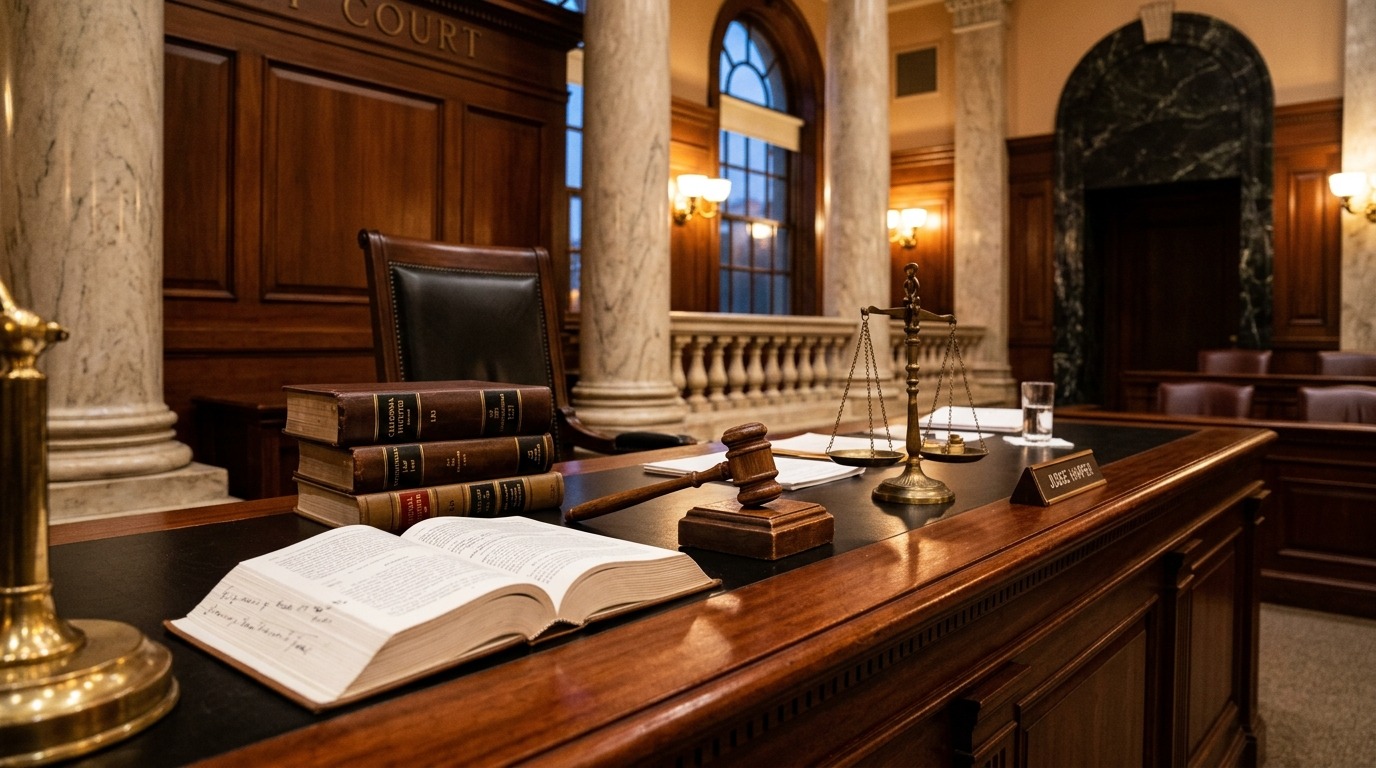
Bhumika Trust v. Union of India & Ors.
Bench: Hon'ble Chief Justice Surya Kant and Hon'ble Mr. Justice Augustine George Masih
Judgment Date: 21 August 2026 • Author of Judgment: Surya Kant, CJI • Analysis by: V Gayathri
The quality of a judicial system depends not only on the legal knowledge of its judges but also on their practical understanding of litigation, sensitivity to litigants, and ability to manage courtroom proceedings. In Bhumika Trust v. Union of India & Ors. (2026 INSC 904), a Division Bench of the Supreme Court comprising Chief Justice Surya Kant and Justice Augustine George Masih reconsidered the implementation of the Court’s 20 May 2025 order in All India Judges’ Association v. Union of India, which had abruptly restored a mandatory eligibility requirement of three years’ active practice at the Bar for aspiring Civil Judges (Junior Division). Reconciling the tension between practical courtroom readiness and equitable, meritocratic access to judicial public service, the Apex Court established a nuanced dual framework: maintaining full transitional eligibility for fresh law graduates until March 2027 backed by structured judicial academy training and clerkships, while prescribing a rationalized one-year Bar practice threshold for future recruitments post-April 2027.
| Case Reference & Judicial Metadata | |
|---|---|
| Case Title | Bhumika Trust v. Union of India & Ors. (with connected Review Petitions & IAs) |
| Neutral Citation | 2026 INSC 904 |
| Judgment Date | 21 August 2026 |
| Court & Coram | Supreme Court of India • Chief Justice Surya Kant and Justice Augustine George Masih (Judgment authored by Surya Kant, CJI) |
| Nature of Proceedings | Writ Petition (Civil) No. 1110 of 2025 with Review Petitions & connected Interlocutory Applications under Article 32 / Article 137 |
| Statutory Framework & Precedents | Articles 14, 16, 21, 234 of the Constitution • All India Judges’ Association cases (1993, 2002, 2025) • Justice Shetty Commission Report |
| Core Outcome | Three-year rule modified: Full transitional relief for fresh law graduates up to 31 March 2027 (deemed 1-yr practice + 1-yr Academy + 1-yr Clerkship); permanent requirement reduced to 1 year of District Court practice from 1 April 2027. |
1. Introduction & Institutional Dilemma
Few questions in Indian judicial administration have proven as recurrent or contentious as the eligibility criteria for entering the subordinate judiciary. When a freshly graduated lawyer ascends the Bench as a Civil Judge (Junior Division) or Judicial Magistrate, they are immediately entrusted with consequential powers over civil property, personal status, interim injunctions, and criminal bail. Does practical competence require spending years navigating the Bar first, or does a mandatory practice requirement merely act as an arbitrary barrier that excludes brilliant, underprivileged, and disabled law graduates?
In Bhumika Trust v. Union of India, the Supreme Court confronted this fundamental dilemma after its 20 May 2025 ruling in All India Judges’ Association v. Union of India restored a three-year Bar practice rule after a 23-year hiatus. The challenge was spearheaded by Bhumika Trust—an organization championing the rights of persons with disabilities—alongside review petitions filed by law graduates and students pursuing master’s degrees (LL.M.).
The Court did not dismiss the premise that aspiring judges need practical exposure. Rather, it dismantled the assumption that three years of passive calendar enrollment at the Bar is the sole or most reliable proxy for judicial competence. The resulting decision represents an institutional landmark that shifts focus from time served to structured clinical learning and transparent evaluation.
2. Facts & Procedural History: The Three-Decade Evolution
The eligibility conditions for Civil Judge (Junior Division) recruitment trace through more than thirty years of continuous monitoring under Writ Petition (Civil) No. 1022 of 1989 (All India Judges’ Association v. Union of India):
- The Second AIJA Case (1993) 4 SCC 288: The Supreme Court directed all States to prescribe a minimum of three years’ practice as an essential eligibility condition, holding that practical experience at the Bar was necessary to cultivate judicial independence and courtroom maturity.
- The Third AIJA Case (2002) 4 SCC 247: Accepting the comprehensive recommendations of the Justice K.J. Shetty First National Judicial Pay Commission, the Supreme Court reversed its stance and abolished the mandatory practice condition. The Court observed that the rule dissuaded meritorious candidates from joining the judiciary, causing top law graduates to migrate to corporate law firms. It mandated that fresh graduates could apply directly, provided they completed intensive pre-service institutional training (preferably two years).
- The 20 May 2025 Reversal: After more than two decades of direct entry for fresh graduates, the Supreme Court restored the three-year practice requirement. The Bench relied on extensive representations from various High Courts indicating that some direct recruits lacked procedural knowledge, judicial decorum, evidence appreciation skills, and the practical instinct required to manage aggressive courtroom dynamics.
- The Bhumika Trust Challenge (2025–2026): Following the 2025 order, Bhumika Trust filed Writ Petition (Civil) No. 1110 of 2025, pointing out that the sudden rule disproportionately harmed candidates with disabilities who face physical inaccessibility in district courts. Concurrently, review petitions and applications from LL.M. scholars were filed. Recognizing the widespread disruption, the Supreme Court solicited input from all High Courts, National Law Universities, and the Amicus Curiae.
3. Principal Legal Issues Before the Supreme Court
The Division Bench formulated five core constitutional and administrative questions:
- Whether the mandatory requirement of three years’ practice at the Bar, restored on 20 May 2025, required reconsideration on grounds of disproportionality and institutional efficacy.
- Whether practical judicial readiness could be achieved more systematically through a combination of limited prior practice, structured institutional training at State Judicial Academies, and supervised judicial clerkships.
- Whether the abrupt reinstatement of the three-year rule without a transitional framework inflicted undue hardship upon fresh graduates, women, economically disadvantaged candidates, and persons with disabilities.
- What transitional arrangements were legally necessary to protect candidates who pursued legal education under the expectation of direct eligibility.
- Whether time spent pursuing higher legal education (LL.M.) could be credited towards the practice requirement.
4. Detailed Submissions & Stakeholder Positions
A. Submissions of the Petitioners & Review Petitioners
The petitioners mounted a multi-pronged challenge against the three-year rule:
- Duration is an Imperfect Proxy for Competence: The passage of three calendar years at the Bar does not guarantee competence. One junior advocate may handle complex evidentiary trials, while another may spend three years carrying files or doing ministerial chamber work due to nepotism or lack of briefs.
- Economic Hardship and Lack of Stipends: Junior advocates in India often face extreme financial vulnerability, with many receiving meager or zero stipends. A mandatory three-year delay excludes meritorious candidates from humble socio-economic backgrounds who cannot afford to sustain themselves without income.
- Gender & Disability Disparities: Women face distinct social, familial, and safety constraints in district litigation, while persons with disabilities encounter hostile physical court architecture, inaccessible restrooms, and a lack of assistive technology. Imposing a rigid physical practice rule without reasonable accommodation violates Article 14 and the Rights of Persons with Disabilities Act, 2016.
- Violation of Legitimate Expectations: Thousands of law students had planned five-year and three-year degree curriculums under the established 2002 AIJA framework permitting direct entry upon graduation. An overnight reversal breached their legitimate expectations.
B. Institutional Submissions: High Courts & Law Universities
The institutional views reflected deep philosophical divergence:
- Pro-Practice High Courts: A substantial number of High Courts staunchly supported retaining prior Bar practice, arguing that trial judges must rule on urgent injunctions, evaluate live witness demeanors, and maintain control of hostile courtrooms—instincts that cannot be taught in a lecture hall.
- Reformist High Courts & Law Schools: Other High Courts and prominent National Law Universities (NLUs) advocated for a modern compromise: reducing active Bar practice to one year and complementing it with rigorous clinical clerkships under sitting judges and simulated trial training at State Judicial Academies.
5. Judgment & Reasoning: The Middle Path
Delivering judgment for the Bench, Chief Justice Surya Kant adopted an institutional middle ground. The Court affirmed that practical exposure is non-negotiable for judicial office, but rejected the notion that three years of traditional Bar practice is the only way to achieve it.
A. Practical Readiness Remains Vital
The Supreme Court affirmed that judicial officers do not merely interpret statutes—they manage human conflict and make immediate decisions affecting life, liberty, and livelihood. Academic excellence alone does not automatically translate into judicial temperament, patience, or procedural command. The Court reaffirmed that candidates must not assume the Bench in total ignorance of courtroom dynamics.
B. Rethinking Conventional Practice vs. Structured Learning
Crucially, the Court decoupled the necessity of practical exposure from the method of acquiring it. CJI Surya Kant observed that three years of unguided junior practice is often disorganized and arbitrary. In contrast, supervised judicial clerkships and structured clinical modules at State Judicial Academies provide deliberate, standardized immersion in evidence analysis, order drafting, and courtroom management.
C. The New Binding Dual Framework
To resolve the transitional crisis while cementing long-term standards, the Supreme Court promulgated a two-tier framework:
| Recruitment Window | Eligibility Condition at Application | Mandatory Post-Selection Training & Clerkship |
|---|---|---|
| Transitional Phase (Notifications between 20 May 2025 and 31 March 2027) |
All Law Graduates Eligible. Candidates are statutorily deemed to have completed one year of active practice for the purpose of eligibility, eliminating the prior practice bar for all applicants. |
• 1 Year Intensive Training at the State Judicial Academy as a Trainee Judicial Officer. • 1 Year Structured Clerkship: 6 months attached to a Principal District & Sessions Judge, and 6 months attached to a sitting High Court Judge. • Training and clerkship count as 2 years equivalent to satisfy the 3-year mandate. • Mandatory reasoned evaluation of integrity, analytical acumen, and temperament before confirmation. |
| Permanent Phase (Notifications issued on or after 1 April 2027) |
Minimum 1 Year of Actual Practice. Must be verified in the District Courts through a standardized Certificate of Practice mechanism framed by respective High Courts. |
• 1 Year State Judicial Academy pre-service curriculum. • 1 Year Supervised Clerkship divided equally between District Courts and the High Court. • Combined model (1 yr Bar + 1 yr Academy + 1 yr Clerkship) completes the 3-year exposure requirement. • Comprehensive suitability assessment precedes independent judicial postings. |
Dismissal of LL.M. Equivalence Claims: The Supreme Court explicitly dismissed applications seeking to treat LL.M. degree coursework as equivalent to active Bar practice. The Bench observed that advanced academic research cannot replace the gritty, practical procedural realities of trial advocacy.
Implementation Timelines & 5-Year Review: All State Governments, in consultation with their respective High Courts, were directed to notify amendments to their Judicial Service Rules within three months. Crucially, the entire framework is designated to operate for five years, after which it will undergo empirical audit and performance review.
6. Ratio Decidendi
Legal Principle (Ratio Decidendi):
Practical exposure to the administration of justice is an essential prerequisite for entry-level judicial office, but the means of acquiring such exposure must bear a reasonable, proportionate relationship to that objective under Articles 14, 16, and 234 of the Constitution. A rigid requirement of three years’ conventional practice at the Bar cannot be treated as the sole proxy for judicial readiness. Practical competence can be developed through a structured hybrid model combining limited prior practice (one year), intensive State Judicial Academy training (one year), and supervised judicial clerkships (one year). To prevent arbitrary exclusion and respect legitimate expectations, fresh law graduates are entitled to transitional eligibility through deemed practice and post-selection institutional training.
7. Key Constitutional Principles & Precedents Re-Evaluated
- The Second AIJA Principle (1993): Upheld the necessity of practical readiness but modernized the mechanism, replacing passive Bar enrollment with clinical judicial clerkships.
- The Third AIJA & Shetty Commission Doctrine (2002): Reaffirmed the Commission’s core insight that unguided Bar practice acts as a barrier to merit, while institutional training creates consistent competence across recruits.
- Substantive Equality in Public Recruitment (Articles 14 & 16): Formal equality (imposing a uniform 3-year rule on everyone) produces substantive inequality when junior lawyers face stark disparities in financial support, mentoring networks, gender roles, and physical accessibility.
8. Independent Critical Assessment & Systemic Impact
The judgment in Bhumika Trust v. Union of India represents one of the most pragmatic exercises in judicial administration in recent Supreme Court history. Its primary intellectual contribution is dismantling the myth of calendar seniority:
A. Competence Over Chronology
A three-year rule is easy for state public service commissions to administer, but it is an unreliable indicator of skill. Equating a lawyer who has actively cross-examined witnesses with one who has merely renewed an enrollment card confuses time served with professional capability. By substituting two years of unguided practice with structured academy training and judicial clerkships, the Court replaced an administrative shortcut with pedagogical rigor.
B. The Institutional Burden on State Judicial Academies
The new framework places immense responsibility on State Judicial Academies. If academies merely subject trainees to didactic classroom lectures on statutory theory, the reform will fail. Academies must institute clinical courtroom simulations, mock evidence recording, and order-writing clinics. Similarly, judicial clerkships must involve active case-study drafting under designated mentor judges rather than clerical administrative work.
C. The Unresolved Plight of Disabled & Underprivileged Junior Lawyers
While the transitional waiver to March 2027 provides immediate relief, the permanent post-April 2027 rule (requiring one year of District Bar practice) leaves underlying systemic inequities intact. Junior advocates still struggle without mandated minimum stipends. For candidates with disabilities, district court complexes across India remain plagued by broken ramps, missing elevators, and inaccessible document filing portals. Without urgent structural infrastructure investments, the one-year practice requirement will continue to act as a barrier for disabled advocates.
D. The Significance of the 5-Year Empirical Sunset Clause
Chief Justice Surya Kant’s inclusion of a five-year empirical review mechanism is an exemplary model of evidence-based jurisprudence. Rather than treating recruitment rules as immutable dogma, the Supreme Court has mandated that the framework be tested against hard data: trial disposal rates, judgment quality, reversal frequencies on appeal, and demographic diversity of recruits.
9. Conclusion
Bhumika Trust v. Union of India successfully navigates between institutional extremes. It refuses to compromise on the necessity of courtroom readiness for trial judges, while fiercely protecting the democratic accessibility of judicial service. By transforming judicial recruitment from a passive waiting game at the Bar into an active pipeline of structured clinical training and mentorship, the Supreme Court has laid the foundation for a more skilled, empathetic, and inclusive subordinate judiciary.
Official Companion Judgment Analysis (PDF)
Complete case brief, procedural history, comparative framework table, and constitutional ratio • 2026 INSC 904