Death Penalty by Hanging & Stare Decisis: Supreme Court Reaffirms Deena Precedent in Rishi Malhotra v. Union of India (2026 INSC 873)
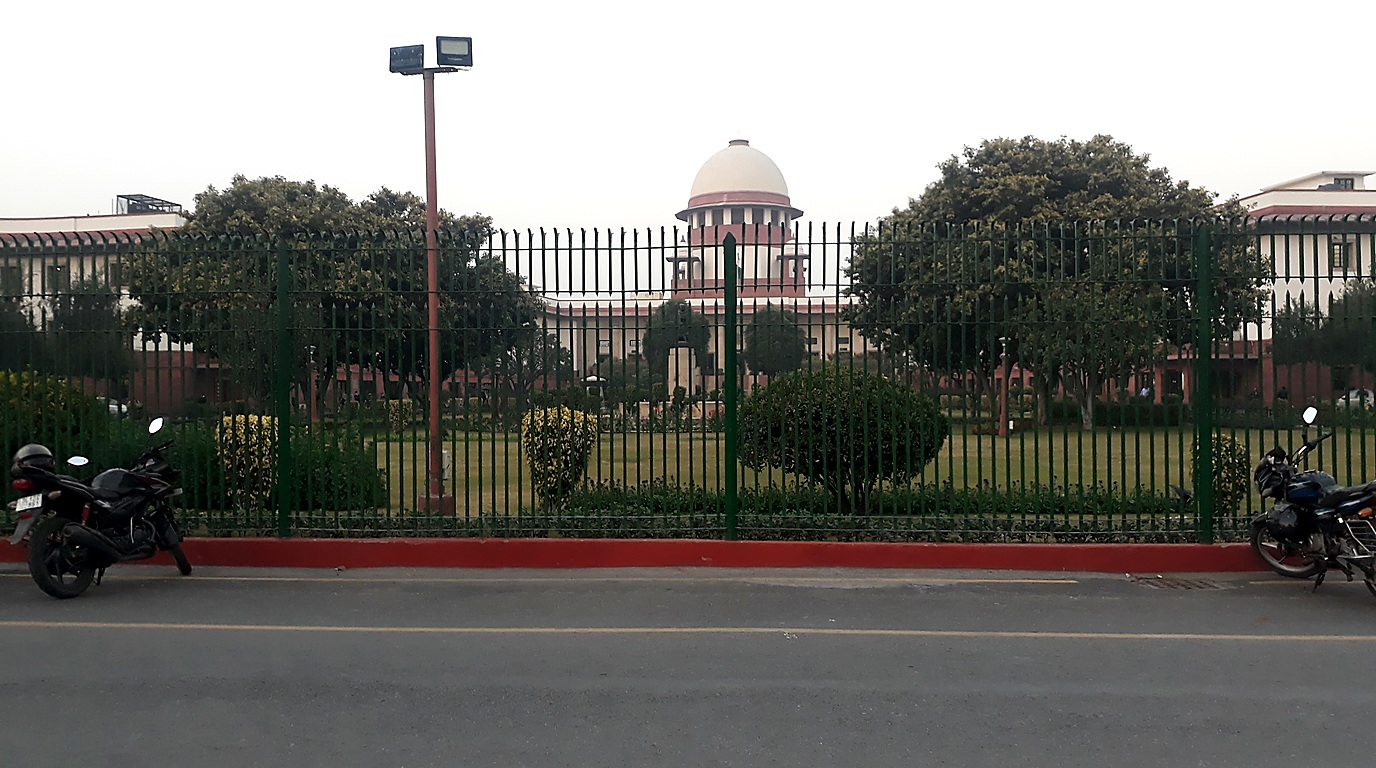
Rishi Malhotra & Anr. v. Union of India
Bench: Hon'ble Mr. Justice Sandeep Mehta & Hon'ble Mr. Justice Vikram Nath
Judgment Date: 18 August 2026 • Analysis by: V Gayathri
In Rishi Malhotra & Anr. v. Union of India (2026 INSC 873), the Supreme Court of India adjudicated a significant constitutional challenge directed against the statutory method of executing capital sentences under Section 354(5) of the Code of Criminal Procedure, 1973 (CrPC) and Section 393(5) of the Bharatiya Nagarik Suraksha Sanhita, 2023 (BNSS)—which prescribe that a death row convict shall be "hanged by the neck till he is dead". Dismissing a Public Interest Litigation under Article 32 of the Constitution, the Division Bench held that the doctrine of stare decisis prohibits a smaller bench from reopening binding larger-bench precedents—specifically the three-Judge Bench decision in Deena v. Union of India (1983) 4 SCC 645, which had been explicitly approved by a Constitution Bench in Shashi Nayar v. Union of India (1992) 1 SCC 96—in the absence of unimpeachable contemporary empirical and forensic evidence. However, the Court clarified that dismissal does not permanently close the constitutional debate, leaving room for future review by an interdisciplinary expert commission or legislative reform.
| Case Reference & Judicial Metadata | |
|---|---|
| Case Title | Rishi Malhotra & Anr. v. Union of India |
| Citation | 2026 INSC 873 |
| Proceedings | Writ Petition (Criminal) No. 145 of 2017 (Under Article 32 of the Constitution) |
| Coram | Hon'ble Mr. Justice Sandeep Mehta and Hon'ble Mr. Justice Vikram Nath |
| Date of Judgment | 18 August 2026 |
| Statutory Framework | Section 354(5), CrPC, 1973; Section 393(5), BNSS, 2023; Articles 14, 21, and 32 of the Constitution of India; Army Act, 1950. |
| Research & Analysis | V Gayathri, LLM Advocates Legal Research Cell |
| Final Outcome | Writ Petition Dismissed: Challenge to execution by hanging rejected; reference to larger Bench declined; future scientific and expert review left open. |
1. Material Facts and Procedural Trajectory
The statutory mandate requiring capital punishment to be carried out exclusively by hanging by the neck until death has remained a standard feature of Indian criminal procedure since colonial times. Section 354(5) of the CrPC, 1973, which preserved this method, was recently reenacted verbatim by Parliament as Section 393(5) of the Bharatiya Nagarik Suraksha Sanhita, 2023 (BNSS).
In 1983, a three-Judge Bench of the Supreme Court in Deena v. Union of India (1983) 4 SCC 645 evaluated extensive medical, forensic, and comparative evidence and concluded that hanging, when properly conducted by qualified executioners following strict drop-tables, causes instantaneous cervical dislocation and unconsciousness, satisfying the requirements of human dignity under Article 21. This ruling was subsequently endorsed by a Constitution Bench in Shashi Nayar v. Union of India (1992) 1 SCC 96.
In 2017, Advocate Rishi Malhotra approached the Supreme Court under Article 32 seeking to declare Section 354(5) CrPC unconstitutional, relying on the Law Commission of India's 187th Report (2003) which highlighted physical suffering, risk of decapitation, or prolonged strangulation, and advocated lethal injection. Project 39A (NLU Delhi) intervened, presenting forensic evidence from international jurisdictions demonstrating severe complications, vein ruptures, and agonizing deaths during lethal injections.
2. Substantive Issues Formulated by the Court
- Whether Section 354(5) CrPC / Section 393(5) BNSS violates Articles 14 and 21 of the Constitution by prescribing hanging as the exclusive mode of execution?
- Whether contemporary scientific, forensic, and medical developments justified referring the binding precedents in Deena and Shashi Nayar to a larger Bench for reconsideration?
- Whether the judiciary can mandate or substitute alternative execution methods (such as lethal injection or shooting) in the absence of parliamentary legislation?
3. Contentions of the Parties
Petitioners' Submissions
- Violation of Article 21 Dignity: Hanging involves horrific bodily trauma, asphyxial convulsions, cervical cord transection failures, and potential decapitation, violating evolving standards of human dignity.
- Law Commission Recommendations: The Law Commission of India in its 187th Report (2003) recommended amending the law to provide lethal injection as an alternative method.
- Article 14 Discrimination: Military statutes (Army Act, 1950, Air Force Act, 1950, Navy Act, 1957) provide military courts the discretion to award death by shooting or hanging, whereas civilian convicts are denied any alternative.
Union of India's Submissions (Attorney General)
- Binding Stare Decisis: Deena was rendered by three Judges after considering global medical literature, and was approved by a five-Judge Constitution Bench in Shashi Nayar. A two-Judge Bench cannot reopen settled law without compelling justification.
- Legislative Policy Domain: Choosing penal execution methods belongs exclusively to Parliament. Parliament recently reaffirmed hanging when enacting the BNSS in 2023.
- Lack of Superior Alternative: Lethal injection is not demonstrably more humane; evidence from the United States reveals an alarming percentage of botched executions and severe pain.
Submissions of Impleader (Project 39A, NLU Delhi)
- Advocated rigorous contemporary forensic scrutiny of hanging, while simultaneously cautioning against the reflexive assumption that lethal injection is painless or superior, highlighting significant risks of severe chemical burns and failed venous access.
4. Judgment and Reasoning of the Supreme Court
A. Institutional Discipline and the High Threshold of Stare Decisis
The Supreme Court affirmed that constitutional adjudication requires institutional continuity:
"Under the doctrine of stare decisis, a smaller Bench cannot depart from a decision rendered by a larger Bench merely because the question remains a matter of public debate. Reconsideration of a decision approved by a Constitution Bench requires an exceptionally high threshold: unimpeachable scientific, forensic, or empirical evidence establishing that the factual and legal basis of the earlier judgment has been decisively undermined. No such material was produced before us."
B. Insufficiency of Empirical Evidence Against Hanging
The Court held that the petitioners failed to discharge their evidentiary burden:
- The Law Commission's 187th Report is an advisory document, not statutory law or conclusive forensic proof.
- Comparative empirical data revealed that lethal injection—often promoted as a modern medical alternative—has resulted in frequent botched executions, extreme agony, and procedural failures abroad.
- The Court found no conclusive scientific proof demonstrating that hanging, when properly conducted under statutory prison manuals, is constitutionally impermissible.
C. Rejection of the Article 14 Military Law Analogy
The Court decisively rejected the plea based on the Army Act:
- Personnel of the armed forces form a separate and distinct class governed by specialized military law under Article 33 of the Constitution.
- Differentiation between military service personnel and civilian convicts under general criminal law is based on an intelligible differentia and does not violate Article 14.
D. Separation of Powers and Reservation of Future Expert Review
Parliament recently re-enacted execution by hanging in Section 393(5) of the BNSS, 2023. Altering penal execution policy is fundamentally a legislative responsibility. However, the Court carefully qualified its dismissal:
- The dismissal does not permanently foreclose future constitutional scrutiny if rigorous scientific, neurological, and forensic evidence emerges in the future.
- The Union Government remains free to commission a comprehensive study through an interdisciplinary expert body comprising specialists in forensic medicine, neuroscience, penology, and human rights.
5. Ratio Decidendi
Core Principles Established:
- Stare Decisis Threshold: A smaller Bench cannot reopen a constitutional ruling upheld by a larger Bench and endorsed by a Constitution Bench without compelling, unimpeachable empirical evidence.
- Evidentiary Failure: In the absence of conclusive scientific evidence proving that hanging violates Article 21 or that an alternative method is demonstrably more humane, execution by hanging under Section 354(5) CrPC / Section 393(5) BNSS remains constitutionally valid.
- Non-Finality on Science: Judicial dismissal of an inadequately supported constitutional challenge does not foreclose future review should an interdisciplinary expert body generate conclusive empirical data.
6. Precedents Synthesized
| Precedent | Core Principle Applied |
|---|---|
| Deena v. Union of India (1983) 4 SCC 645 | Three-Judge Bench upholding the constitutional validity of hanging under Article 21 as not being cruel, unusual, or degrading. |
| Shashi Nayar v. Union of India (1992) 1 SCC 96 | Constitution Bench unanimously approving Deena and holding that the time had not arrived to declare hanging unconstitutional. |
| Bachan Singh v. State of Punjab (1980) 2 SCC 684 | Upholding the constitutional validity of capital punishment under Article 21 subject to the 'rarest of rare' doctrine. |
7. Conclusion
Rishi Malhotra v. Union of India exemplifies the balance between judicial discipline and progressive constitutionalism. While reaffirming binding precedent under stare decisis and declining to judicially impose untried execution alternatives, the Supreme Court appropriately left the door open for science-driven review, emphasizing that human dignity remains a dynamic constitutional concept governed by evidence rather than assumptions.
Author Attribution & Editorial Disclosure: Prepared by V Gayathri of the LLM Advocates Legal Research Cell. Contributors are permitted to use Artificial Intelligence tools to assist in legal research, synthesis, and drafting. All statutory interpretations and case citations have been independently verified against official Supreme Court records.

